
Why Hamstring Exercises Matter
Hamstring exercises can help you build strength for walking, running, lifting, and sport. They can also be an important part of rehabilitation after a hamstring strain. Yet many people think about their hamstrings only when they feel tight or painful.
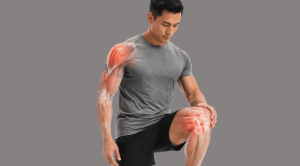
Your hamstrings are a group of muscles at the back of your thigh. They help bend your knee and move your hip backward. When you sprint or quickly change speed, they must work hard while controlling movement.
Strength, movement, and gradual progression all matter. Stretching alone may not prepare your hamstrings for the demands of running or sport. This guide explains what the muscles do, how strains happen, and how exercise can support recovery.
What Are the Hamstring Muscles?
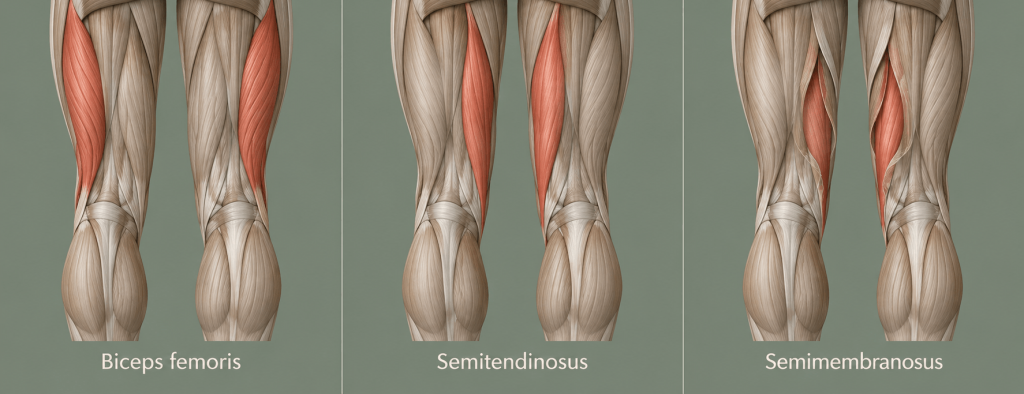
The hamstring group includes these 3 muscles:
- Biceps femoris: Located along the outer side of the back of the thigh.
- Semitendinosus: A long muscle toward the inner side of the back of the thigh.
- Semimembranosus: A deeper muscle on the inner side.
Most of these muscles cross both the hip and knee. Together, they contribute to bending the knee, extending the hip, and controlling the leg during movement. The short head of the biceps femoris is an anatomical exception: it does not cross the hip.
The hamstrings work alongside other muscles, including the glutes and quadriceps. Training them as part of a balanced program is more useful than trying to make one muscle group do everything.
What Do Your Hamstrings Do?
Your hamstrings help with everyday tasks such as standing up, walking uphill, and controlling a step. They are also active during faster movements, especially when the leg swings forward and prepares to contact the ground in sprinting.
Hamstring strength is only one part of performance. Running technique, overall training, fatigue, and the demands of your sport also influence how you move.
Hamstring exercises can help build capacity, but no exercise makes an injury impossible. A useful program matches your current ability and progresses as you adapt.
What Is a Hamstring Strain?
A hamstring strain occurs when muscle fibres are injured. It may happen during a sprint, a sudden acceleration, or a movement that rapidly lengthens the muscle.
You might feel a sudden pain at the back of your thigh and need to slow down or stop. Symptoms can include:
- Pain or tenderness in the back of the thigh
- Pain when bending the knee or extending the hip
- Difficulty walking or running normally
- Swelling or bruising, particularly with a more significant injury
- Reduced strength or confidence when pushing off
Not all pain behind the thigh is a hamstring strain. Symptoms may also come from a tendon or another area. If the injury was severe, you cannot walk normally, or symptoms are not improving, seek an assessment.
Should You Stretch a Sore Hamstring?
A sore hamstring does not always need a harder stretch. Immediately after a strain, aggressive stretching may aggravate symptoms. The appropriate amount of movement depends on the injury and how it responds.
Gentle, comfortable movement may be introduced as recovery progresses. Strengthening then helps the muscle tolerate more work. If you feel persistent tightness despite stretching, an assessment can help determine whether reduced strength, an irritable tendon, or another factor is involved.
Hamstring exercises should be matched to the stage of recovery, rather than chosen only because they create a strong stretching sensation.
5 Hamstring Exercises to Discuss With Your Clinician
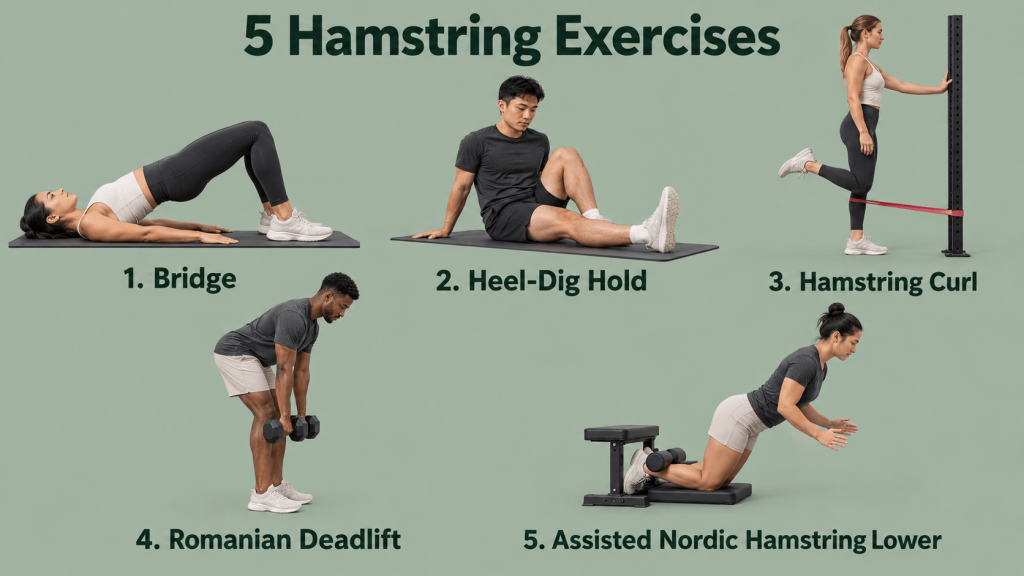
The following exercises offer different ways to train the hamstrings. Start at a level appropriate for you. If you have a recent strain, your physiotherapist can advise when and how to introduce each movement.
1. Bridge
Lie on your back with your knees bent and feet on the floor. Lift your hips slowly, then lower with control. Move only as far as feels manageable. A bridge also works the glutes, making it a useful starting movement for many people.
2. Heel-Dig Hold
With a knee bent, press your heel gently into the floor without moving the leg. Hold briefly, then relax. Your clinician may use this type of exercise when movement is uncomfortable and a controlled muscle contraction is appropriate.
3. Hamstring Curl
Bend your knee against light resistance from a band, machine, or other suitable setup. Move slowly in both directions. Resistance and range of motion can increase as your strength and comfort improve.
4. Romanian Deadlift
Stand tall, soften your knees, and move your hips backward while keeping the weight close to your legs. Return to standing with control. Learn the movement with little or no added weight before progressing.
5. Assisted Nordic Hamstring Lower
With your lower legs secured, slowly lean forward from the knees while a partner, band, or your hands help control the movement. This is a demanding exercise and usually suits a later stage of strengthening.
The right hamstring exercises depend on your goal. Someone returning to comfortable walking needs a different progression from an athlete preparing to sprint.
How Does Hamstring Rehabilitation Progress?
Rehabilitation is usually gradual. Early care may focus on comfortable walking and movement. Strength work then becomes more challenging as symptoms settle and capacity improves.
For a person returning to sport, a program may eventually include:
- Strengthening through suitable ranges of motion
- Exercises that control the muscle as it lengthens
- Gradual running and acceleration
- Sport-specific changes of speed or direction
Being able to walk without pain is an encouraging milestone, but it does not necessarily mean the hamstring is ready for full-speed sprinting. Decisions about returning to sport should consider strength, movement, confidence, and the demands of the activity.
Can Hamstring Exercises Help Prevent Strains?
Strengthening can be part of an injury prevention program, especially in sports with frequent sprinting. Programs that include Nordic hamstring exercises have shown promise in studies of athletes. Results for an individual still depend on factors such as training exposure, consistency, and sport demands.
A sustainable plan may combine hamstring strengthening with sensible training progression and preparation for the speeds you need in your activity. After a previous strain, it is particularly important to complete a suitable return-to-activity progression.
For a closer look at the research, see the hamstring strain clinical practice guideline and this review of Nordic hamstring exercise programs.
How Couve Health Can Support Your Recovery
If you have pain in the back of your thigh, the first step is understanding what is causing it and what activities you need to return to. At Couve Health, physiotherapy can help guide an individual exercise plan and a gradual return to movement. Kinesiology and active rehabilitation may help you continue building strength and physical capacity. Couve Health also offers IMS dry needling; whether an additional treatment is appropriate should be discussed with your clinician. It does not replace a progressive rehabilitation plan.
Build Stronger Hamstrings With a Plan
Your hamstrings do more than bend your knees. They contribute to everyday movement and help manage the demands of running and sport. If they are injured, recovery involves more than waiting for the pain to fade.
Well-chosen hamstring exercises can help you rebuild strength at a pace that fits your symptoms and goals. The team at Couve Health can assess your concerns and help plan your next steps.
- Book an assessment: Book an appointment
- Explore physiotherapy: Learn more
- Call us: 604-449-7606
- Visit our website: Couvehealth.com