
Understanding a Rounded Upper Back
A rounded upper back can become especially noticeable in a photograph or after a long day at a desk. You may see your shoulders forward, your head leaning toward a screen, or a more pronounced curve through your upper spine. It is understandable to wonder whether this position will get worse over time.
The upper back, also called the thoracic spine, naturally curves. Its appearance varies between people and changes as you move. A temporary slouch is not proof that your spine has been damaged. However, a curve that appears increasingly pronounced, feels difficult to straighten, or comes with other symptoms deserves a closer look.
There is no single “hunchback timeline” that everyone follows. Understanding the reason for the change matters more than comparing yourself with a series of posture pictures.
Does Slouching Turn Into a Permanent Hunchback?
The reference images show a progression from forward head position to rounded shoulders and then to a pronounced spinal curve. That sequence may be visually compelling, but it is not a reliable prediction of what happens to every person who sits at a desk.
You can sit in a slouched position and later move comfortably into another position. Holding one position for a long time may leave you stiff or tired, but stiffness alone does not establish that your vertebrae, discs, or nerves have been injured.
A rounded upper back that remains pronounced when you try to stand upright may have a different explanation. That is one reason a clinician considers your history, symptoms, flexibility, and physical examination rather than judging the cause from appearance alone.
Postural Rounding and Kyphosis: What Is the Difference?
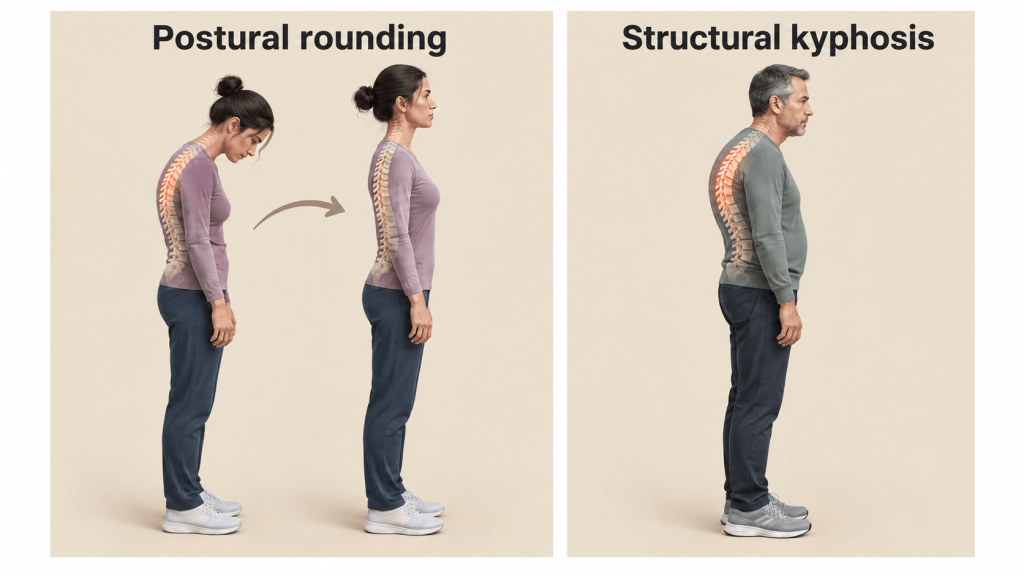
Kyphosis is the term for a forward curve of the upper spine. Some degree of thoracic kyphosis is normal. Healthcare professionals use the term when discussing a more pronounced curve, but its cause and significance vary.
Postural rounding may be flexible: the shape changes when you adjust your position. A structural curve is less flexible because of the shape of the bones or another underlying condition. Causes of more pronounced kyphosis can include developmental conditions, age-related changes, or vertebral fractures associated with weakened bones.
This distinction affects care. Exercises may help someone with a flexible rounded upper back build strength, move comfortably, and manage symptoms. They should not be promised to reshape a structural spinal curve.
Why Might Your Upper Back Look More Rounded?
Several factors can contribute to how your upper back looks and feels:
- Position and habit: Your head, shoulders, and upper back move as you read, work, drive, and use a phone.
- Movement and strength: Limited activity or reduced strength may make certain positions feel harder to maintain comfortably.
- Natural variation: Spinal curves and body shapes differ from one person to another.
- Structural changes: A spinal condition or vertebral fracture can alter the curve and may need medical evaluation.
Age can be part of the picture, but a rounded upper back is not simply an unavoidable result of getting older. Nor should every visible curve be blamed on a phone or desk chair.
What Symptoms Should You Pay Attention To?
Some people with an increased upper-back curve have few symptoms. Others notice stiffness, discomfort, fatigue, or difficulty with certain activities. The appearance of a curve does not reliably tell you how much pain someone has.
Arrange an assessment if your rounded upper back seems to be changing, is difficult to straighten, or is accompanied by persistent pain. A clinician should also assess new back pain after a fall, especially if you have osteoporosis or another reason your bones may be fragile.
Seek prompt medical advice for new weakness, numbness, trouble walking, or breathing difficulties. These symptoms need individual evaluation rather than a home posture routine.
5 Ways to Support Upper-Back Movement and Strength
There is no exercise that suits every cause of a rounded upper back. The following ideas may be useful for general comfort and conditioning. Start gently, stay within a comfortable range, and ask a healthcare professional for advice if you have a known spinal condition, recent injury, or worsening symptoms.
1. Change Positions During the Day
Stand up, walk briefly, or settle into another comfortable sitting position when you feel stiff. You do not have to hold one rigid “perfect posture” throughout the workday. Making movement convenient is often more practical than repeatedly checking the angle of your shoulders.
2. Try Gentle Upper-Back Mobility
A gentle seated upper-back rotation or extension may help you explore comfortable movement. Move slowly rather than forcing a stretch. If a movement increases pain or causes unusual symptoms, stop and discuss it with a clinician.
3. Build Strength Gradually
Exercises that work your upper back, shoulders, and trunk may help with everyday tasks and physical confidence. A physiotherapist can help select an appropriate starting level and increase the challenge as you improve.
4. Make Your Workspace Comfortable
Place frequently used items where you can reach them easily. Adjust your chair and screen so you can work without continually straining to see or reach. Leave yourself room to change position; an ergonomic setup should support movement rather than lock you in place.
5. Stay Active Outside Your Desk
Walking and other enjoyable activity help build general fitness. A short exercise session cannot erase an entire day of sitting, but regular movement can be a useful part of managing stiffness and maintaining strength.

Can Treatment Reverse a Rounded Upper Back?
Treatment depends on what is causing the curve. For flexible postural rounding, exercise and movement advice may help with comfort, strength, and how easily you change positions. With structural kyphosis, exercises may help symptoms and function without changing the underlying spinal shape. Some cases require assessment by a medical specialist.
Be cautious of images that show discs “restored” or a spine permanently straightened after a few minutes with a device. Those illustrations cannot demonstrate what happened inside a real patient’s spine. An individual assessment is the best starting point for deciding which approaches may be appropriate.
For further patient information, read the NHS overview of kyphosis and the American Academy of Orthopaedic Surgeons guide to kyphosis.
How Couve Health Can Help
If a rounded upper back concerns you or is affecting your activities, a clinician can assess your symptoms, movement, and goals. They can help determine whether the rounding is flexible or whether a structural curve or another condition may require further medical evaluation.
At Couve Health, physiotherapy can help you develop a personalized plan that may include gradual upper-back and trunk strengthening, comfortable mobility exercises, and practical ways to vary your positions and activity during the day. The exercises and pace should reflect your symptoms and what the assessment finds.
Chiropractic care may help address associated discomfort or movement concerns following an individual assessment. If the curve appears fixed, is becoming more pronounced, or raises concern, your clinician may recommend medical evaluation.
Look Beyond the Posture Picture
A rounded upper back does not automatically follow a predictable path from slouching to permanent deformity. The shape may change with position, or it may reflect a spinal condition that needs assessment. Either way, you deserve an explanation based on your own symptoms and examination.
If you have persistent discomfort, notice a changing curve, or want help moving and exercising more comfortably, the Couve Health team can guide your next steps.
- Book an assessment: Book an appointment
- Explore treatment: Learn about treament
- Call us: 604-449-7606
- Visit our website: Couvehealth.com