
Understanding Sitting and Back Pain
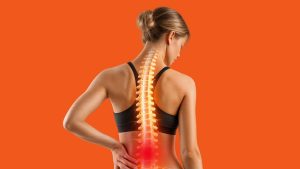
Sitting and back pain often seem to go together. You finish a long workday, stand up from your desk, and notice stiffness or an ache across your lower back. It is easy to wonder whether the hours in your chair have damaged your spine.
The answer is usually more nuanced. Sitting is a normal activity, and a rounded back does not automatically mean something is wrong. Some people find that remaining in one position for a long time makes their back uncomfortable. Others can sit for hours without symptoms. Your activity level, sleep, stress, previous episodes of pain, and the way your day is structured can all affect how you feel.
The useful question is not “Am I sitting perfectly?” It is “What helps me stay comfortable and keep moving?”
What Happens to Your Back When You Sit?
Your spine, discs, joints, muscles, and nerves work together while you sit, stand, walk, and bend. Sitting changes how your body carries weight, but those changes are normal. A temporary ache after sitting does not prove that a disc is compressed, a nerve is inflamed, or your spine has been damaged.
Holding any position for a long stretch may become uncomfortable. Muscles can feel tired, joints may feel stiff, and standing up may take a moment. Moving around often helps those sensations settle.
If your discomfort is persistent, getting worse, or accompanied by leg symptoms, an assessment can help identify what may be contributing to it.
Does Poor Posture Cause Back Pain?
There is no single sitting posture that works best for everyone. Slouching briefly is not a sign that you have harmed your back, and sitting upright all day is not a guaranteed way to prevent pain.
A comfortable position matters more than maintaining a rigid one. You might sit back against your chair for part of the day, lean forward while concentrating, then stand for a call. Changing positions gives you options when one begins to feel uncomfortable.
Posture can be a useful adjustment, but it is only one part of the picture. If your chair or desk setup makes you strain to reach your screen, changing that setup may help. You do not need to monitor every angle of your spine.
7 Practical Ways to Manage Sitting and Back Pain
1. Change Positions Regularly
Notice when you start to feel stiff and try another position. Stand, take a few steps, or adjust how you are sitting. A reminder can help on busy days, but there is no exact interval that suits everyone.
2. Add Short Walks to Your Day
Walk to refill your water, take a call on your feet, or go outside during a break. These small opportunities make movement easier to fit into a desk-based day.
3. Make Your Workspace Comfortable
Keep your screen and commonly used items within an easy reach. Adjust your chair so you can sit comfortably, with your feet supported if needed. A useful setup is one you can work in without feeling stuck in a single position.
4. Try Gentle Movement
Standing, walking, and comfortable movements of your back or hips may ease stiffness. Start with movements that feel manageable. Stop and seek advice if an activity clearly worsens your symptoms.
5. Build Strength Gradually
Regular exercise can help you feel more capable during work and everyday activities. Walking, resistance training, or a guided exercise program may be suitable depending on your symptoms and goals. Begin at a level you can tolerate and build from there.
6. Look Beyond Your Desk
Consider the rest of your week. Long drives, changes in exercise, poor sleep, and periods of stress can all coincide with a flare-up. Looking at the full pattern may be more helpful than blaming a single sitting position.
7. Get Help When Pain Persists
If back pain keeps interrupting your work, sleep, or activities, a healthcare professional can assess your symptoms and help you plan a gradual return to what matters to you.
Can Sitting Cause a Disc Injury?
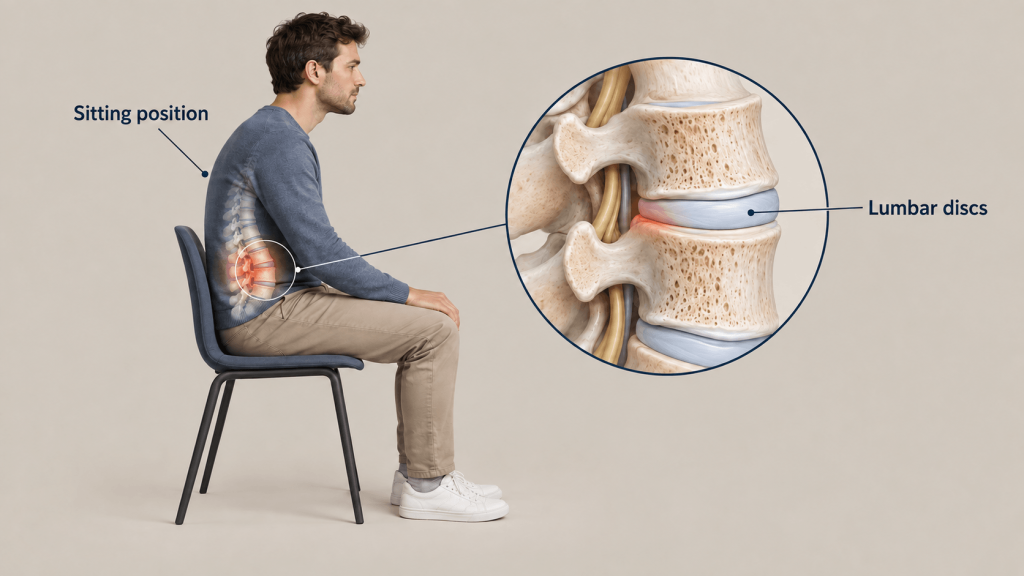
Back pain after sitting does not, by itself, tell you whether a disc is injured. Many conditions can cause similar symptoms, and pain does not always match what appears on an image.
Seek a clinical assessment if pain repeatedly travels into your leg, or you develop numbness or weakness. Seek urgent medical care for new problems controlling your bladder or bowels, numbness around the groin or saddle area, or rapidly worsening weakness.
An individual assessment is more useful than diagnosing a “compressed disc” from posture alone.
What About Spinal Decompression?
You may have seen images suggesting that a short decompression session instantly restores worn discs. Those before-and-after illustrations should not be taken as evidence of what happens inside a person’s spine.
Spinal decompression is a service offered at Couve Health. Whether it is appropriate depends on your symptoms, health history, assessment findings, and treatment goals. It should not be presented as a guaranteed way to repair a disc or reverse the effects of sitting. Your clinician can explain the available options and how any proposed treatment fits with a broader care plan.
How Couve Health Can Help
If sitting is regularly followed by back discomfort, a clinician can help you understand your symptoms and identify practical next steps. An assessment may explore your movement, strength, daily demands, and activities you want to return to.
Physiotherapy may include movement advice, exercise, and a plan for gradually increasing activity. Chiropractic care may also be considered following an individual assessment. Your plan should reflect your symptoms and preferences rather than a rule that everyone must sit the same way.
For more information about activity and sitting, see the World Health Organization’s physical activity guidance and the Cambridge University Hospitals guide to posture and back pain.
Find a More Comfortable Way to Work and Move
Sitting and back pain can be frustrating, especially when your work requires hours at a desk. You do not need to fear sitting or force yourself into one “perfect” posture. Comfortable position changes, regular activity, and a plan tailored to your symptoms are sensible places to start.
If your back pain is persistent or limiting your day, the team at Couve Health can help you explore what is going on and how to move forward.
- Book an assessment: Book an appointment
- Explore treatment: Learn about physiotherapy
- Call us: 604-449-7606
- Visit our website: Couve Health