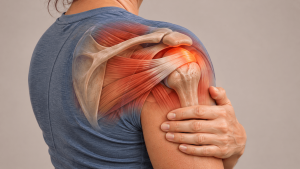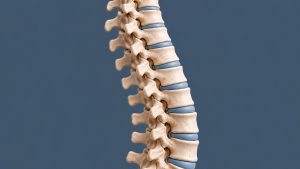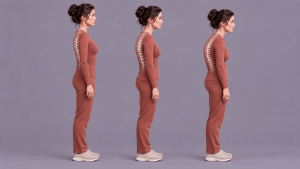

By mid-afternoon, you catch yourself leaning towards your screen. You sit up, pull your shoulders back, and get on with your work. A few minutes later, you’re leaning forward again. If sitting upright feels like something you have to keep reminding yourself to do, try noticing what happens to your breathing when you change position.
Breathing and posture are connected through the movement of your rib cage and the work of your diaphragm. You can feel that connection for yourself with a few quiet breaths. It may also help you find a position that feels more comfortable during a long day at your desk.
How are breathing and posture connected?
Your diaphragm is a dome-shaped muscle that sits beneath your lungs. When you breathe in, it contracts and moves down, making more room for your lungs to expand. Your rib cage moves, and you may feel your lower ribs and abdomen gently expand. As you breathe out quietly, the diaphragm relaxes and moves back up.
The diaphragm also works with other trunk muscles during movement. In laboratory studies, it helped regulate pressure inside the abdomen during tasks that challenged trunk stability. That shared role helps explain why breathing and trunk movement are often considered together during rehabilitation.
What’s the difference between upper-chest and diaphragmatic breathing?
With an upper-chest breathing pattern, the movement you notice most is near your upper ribs and collarbones. Muscles around the neck can help when breathing demands increase, such as during exercise. Some upper-chest movement is a normal part of breathing.
In a diaphragmatic breathing exercise, you pay more attention to the gentle movement around your lower ribs and abdomen. At rest, try noticing whether your shoulders can stay relaxed while you breathe comfortably. Where you feel movement is one observation. Recurring neck or back pain can have several contributors, including workload, previous injuries, and how long you spend in one position.

Why does sitting upright sometimes feel tiring?
Try this the next time you’re at your desk. Take a quiet breath in your usual working position. Then let the chair support your back, rest your feet on the floor or a footrest, and take another. Notice whether either position makes it easier to relax your shoulders or feel your lower ribs move.
When you spend a long time looking at a screen, you may stay in much the same position from one task to the next. Even a position that feels comfortable at the start of the day may feel stiff by the end of a long meeting. For more ways to vary how you sit and move, see our guide to sitting and back pain.
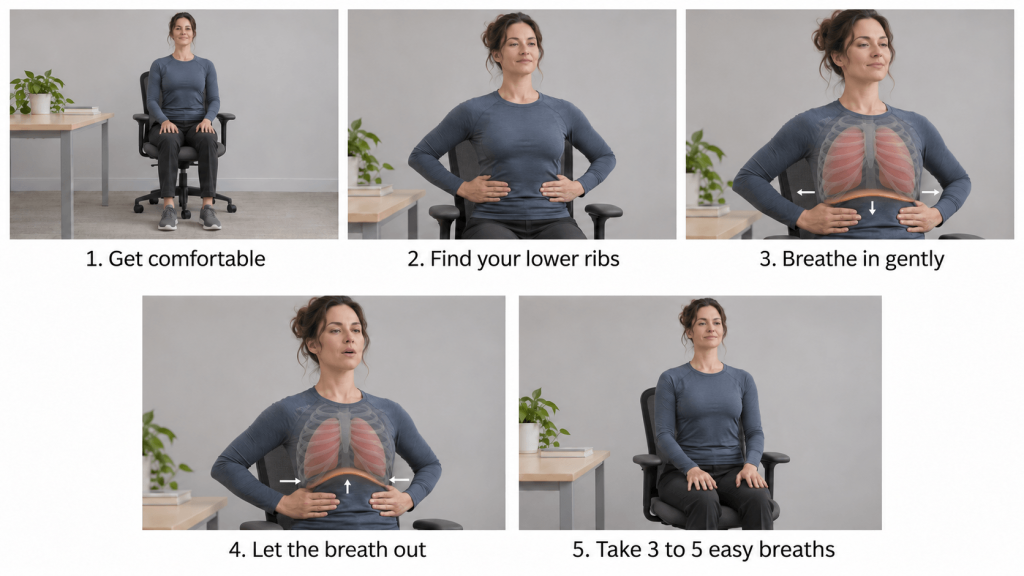
Try a gentle diaphragmatic breathing exercise at your desk
- Get comfortable. Sit with your feet supported and let your shoulders and jaw relax.
- Find your lower ribs. Rest your hands lightly along the sides of your lower rib cage.
- Breathe in gently. If it feels comfortable, inhale through your nose and notice whether your lower ribs move slightly into your hands.
- Let the breath out easily. Feel your ribs settle as you exhale. Keep the breath small enough that it feels unforced.
- Try three to five easy breaths. Then return to your usual breathing and notice how the position feels.
If you feel light-headed or uncomfortable, pause and return to your usual breathing.
Three ways to make desk work more comfortable
- Bring your work closer. Position your screen so you can read it without leaning forward. Keep your keyboard and mouse within easy reach.
- Give your body some support. Try resting your feet flat or using a footrest. Adjust your chair so you can use the backrest and keep your shoulders relaxed while typing.
- Use natural breaks to change position. Stand after a call, walk to refill your water, or switch to a task that gets you away from the screen for a few minutes.
Common questions about breathing and posture
Can breathing exercises improve my posture?
Breathing exercises can help you notice how your rib cage moves and how much effort you use to sit upright. Changes to your workstation, regular movement, and exercises tailored to your needs can also help you find positions that feel comfortable.
Is it normal for my chest to move when I breathe?
Yes. Your chest and ribs naturally move with breathing, and the amount of movement changes with activity. During the seated exercise, keep the breath comfortable and see whether you can also feel a little movement around the lower ribs.
When should I see a physiotherapist for desk-related discomfort?
Consider an assessment if neck or upper-back discomfort keeps returning, interrupts your work, or limits activities you enjoy. A physiotherapist can look at which positions and movements bring on your symptoms and help you choose exercises or workstation changes that fit your day.
Book a physiotherapy assessment at Couve Health
If your neck, shoulders, or upper back regularly feel stiff after desk work, our Vancouver physiotherapy team can assess how you move and help you build a plan around your work and daily activities.
Visit Couve Health at West Broadway or Downtown Vancouver.
Book your appointment online or call 604-449-7606.