
Reaching for a mug on the top shelf feels fine until your arm gets halfway up. Later, you roll onto the same shoulder in bed and the ache wakes you up. These are common ways rotator cuff pain can show up. When you first noticed it, which movements set it off, and whether your arm feels weaker can all help narrow down what’s happening.
Four terms you might hear during a shoulder assessment are rotator cuff tendinopathy, rotator cuff tear, shoulder impingement, and calcific tendinitis. They describe different findings or patterns of symptoms, and there can be overlap. Knowing what each term means can help you understand your assessment and ask better questions about getting back to work, exercise, or a comfortable night’s sleep.
What Is Rotator Cuff Pain?
The rotator cuff is a group of four muscles and their tendons. The muscles start on your shoulder blade, and their tendons attach to the top of your upper arm bone. They help keep the ball of the upper arm centred in the socket as you lift or rotate your arm. They work with other muscles around the shoulder blade and upper arm when you reach, carry, push, or pull.
Rotator cuff pain is often felt at the front or outside of the shoulder and sometimes extends down the upper arm. You might notice it when putting on a coat, reaching into the back seat, or putting something away overhead. The location is a useful clue. Your clinician will also ask about any injury, check your movement and strength, and consider whether another area, such as your neck, could be contributing.
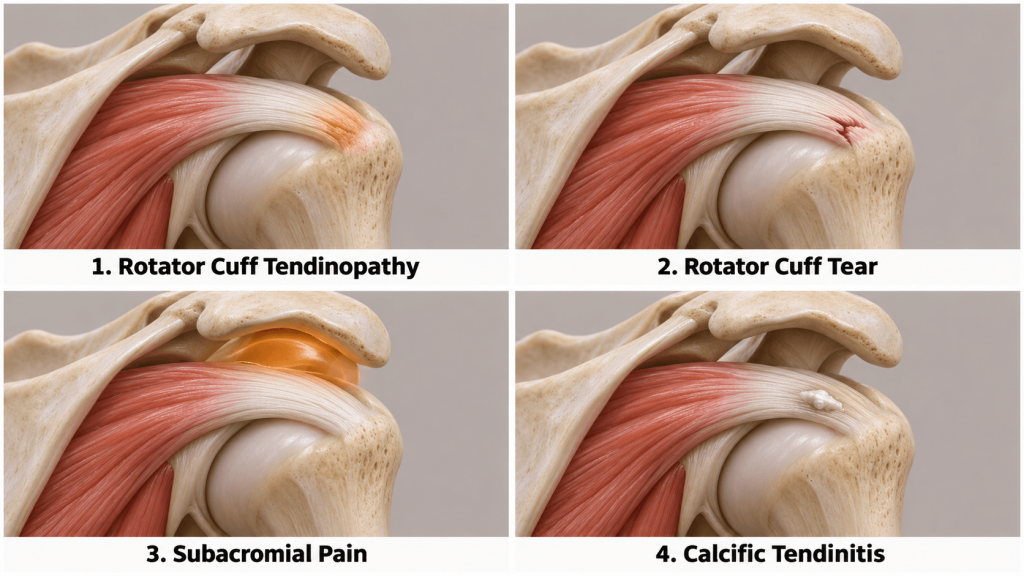
4 Shoulder Problems Linked to Rotator Cuff Pain
1. Rotator Cuff Tendinopathy
Rotator cuff tendinopathy refers to a painful tendon problem that can make loading the shoulder less comfortable. You may also hear the term tendinitis. Tendinopathy is the broader term and covers changes in how the tendon responds to activity.
Symptoms can build gradually or become noticeable after an increase in activity. Painting a ceiling over the weekend, adding more overhead presses, or returning to swimming after time off are examples of changes worth mentioning during an assessment. An ache during lifting or when lying on that side is common. The same symptoms can also occur with other shoulder conditions.
2. Rotator Cuff Tear
A rotator cuff tear can extend through part or all of the thickness of a tendon. It may follow a fall or another injury, or develop gradually as the tendon changes over time. Some tears show up on imaging in people who have little or no shoulder pain. Others affect strength, sleep, and everyday tasks. Learn more about torn rotator cuff tendons at HealthLink BC.
One important detail is how the arm works after an injury. If you could lift your arm normally before a fall and now have marked weakness or difficulty raising it, seek prompt medical assessment. When symptoms build gradually, decisions about care depend on factors such as your strength, daily activities, and what the examination shows.
3. Shoulder Impingement or Subacromial Pain
Shoulder impingement is a familiar term for pain that often comes on when you raise your arm. Clinicians may also call this subacromial pain, referring to the area beneath the acromion, the bony part of your shoulder blade that forms the roof over the joint. The rotator cuff tendons and a small cushioning sac called a bursa are in this region.
You might feel pain through part of the lifting motion, such as when reaching out to the side to close a car door. That pattern can overlap with rotator cuff tendinopathy. During an assessment, your clinician may compare reaching with a bent elbow, changing the direction of the reach, or using a lighter load to see how the shoulder responds.
4. Calcific Tendinitis
Calcific tendinitis, also called calcific tendinopathy, involves calcium deposits within a rotator cuff tendon. Some people have a deposit and feel fine. Others develop an ache with movement or a sudden, intense flare that makes it difficult to move the shoulder, even without a fall or obvious injury.
An X-ray or ultrasound can help identify a calcium deposit when a clinician suspects one. The finding is interpreted alongside when the symptoms started, how much movement is available, and what the shoulder can tolerate. A deposit can be one part of the explanation for shoulder pain.
Why Does Rotator Cuff Pain Feel Similar Across Conditions?
Several shoulder structures work together when you lift the arm. The same action can bring on symptoms in people with different findings. Night pain can also feel similar across conditions, especially if you lie directly on the sore shoulder. An assessment puts those clues together with how much the shoulder can move, whether weakness came on suddenly, and which activities matter most to you.
Imaging can help when an injury raises concern for a significant tear, when another condition is suspected, or when symptoms persist despite an appropriate course of care. For suspected rotator cuff tendinopathy without signs of a more serious injury, assessment and initial care can often start without a scan. See the clinical practice guideline for rotator cuff tendinopathy.
How Can Shoulder Physiotherapy Help?
A physiotherapist can assess how you lift and rotate your arm, compare your movement and strength on each side, and discuss what you want to get back to. For rotator cuff tendinopathy, current clinical guidance recommends active rehabilitation as an initial treatment. This can include exercises to improve how you control the shoulder and progressively build strength.
Your starting point depends on what the shoulder can handle. Someone who struggles to reach into a cupboard may start with supported reaching. Someone who can manage daily tasks but gets sore serving a tennis ball may work on strength and endurance before returning to a full practice. A plan can also include changes to how often you do a task or how much weight you use while the shoulder builds tolerance.
Progress can show up as easier dressing, fewer sleep interruptions, or more confidence lifting a bag of groceries. Your physiotherapist can adjust the plan as those goals change and recommend medical evaluation if your symptoms suggest you need it.
3 Things to Try at Home for Gradual-Onset Shoulder Pain
- Adjust the reach. Move frequently used items to a lower shelf temporarily. If you need to lift something, try keeping it closer to your body or using both hands.
- Find a more comfortable sleeping position. Try lying on your back or on the other side. Supporting the sore arm with a pillow in front of you can make it easier to settle.
- Keep moving within a comfortable range. Let the arm move during everyday tasks you can manage. If a movement repeatedly flares symptoms, shorten the range, reduce the load, or do fewer repetitions while you work out what the shoulder tolerates.
These steps are intended for gradual-onset discomfort. If pain started with a fall, collision, or sudden loss of strength, seek an assessment before starting a new exercise routine.

How to Build Back Up Without Repeated Flare-Ups
When your shoulder starts to feel better, change one part of the activity at a time. If you’re returning to the gym, try a manageable weight, then increase the volume or range as the shoulder adapts. If your job involves working overhead, alternate tasks when possible and start with shorter bouts of reaching. A gradual return gives you a chance to see how the shoulder responds during the task and afterward.
Use a goal that reflects your day. That might be getting a dish down from the cupboard, working through a full shift, or returning to swimming. Start with a version you can repeat comfortably and build towards the full task. If symptoms keep flaring despite adjusting the load, a clinician can help identify what needs to change.
When Should You Get Shoulder Pain Checked?
Arrange an assessment if shoulder pain keeps returning, regularly disturbs your sleep, or limits reaching, lifting, or dressing. New or worsening weakness is also worth getting checked.
Seek urgent medical care if you cannot move the arm after an injury, the shoulder looks out of place, or you have sudden severe pain or a hot, swollen shoulder with fever. If you suspect the joint has come out of its socket, see our guide to shoulder dislocation symptoms and care.
Call 911 if shoulder or arm pain occurs with chest pressure, shortness of breath, sweating, or other symptoms of a possible heart attack. Read more about when to seek medical care for shoulder symptoms.
Take the Next Step for Rotator Cuff Pain
Start with what has changed. If you’ve stopped reaching overhead, switched which side you sleep on, or noticed weakness during tasks you used to do easily, those details give your clinician a starting point. The assessment can help you decide whether to adjust an activity, begin rehabilitation, or seek further medical evaluation.
If shoulder pain is getting in the way of work, sleep, or exercise, our Vancouver physiotherapy team can assess your movement and strength and build a plan around the activities you want to get back to.
Visit Couve Health at West Broadway or Downtown Vancouver.
Book a physiotherapy assessment online or call 604-449-7606.